
 Free Course – “Neurofeedback: An Overview” – Enroll Now
Grand Rounds Group
This peer consultation series brings together experienced neurofeedback practitioners to examine complex clinical cases in a collaborative grand rounds format. Through structured case presentations and interdisciplinary dialogue, participants refine their clinical reasoning skills while tackling challenging scenarios involving treatment resistance, comorbid conditions, and ethical complexities. This advanced course emphasizes the integration of diverse clinical perspectives and the synthesis of neurofeedback with complementary modalities. Designed for established providers seeking to deepen their expertise and combat clinical isolation, the series fosters ongoing professional development through collective problem-solving and constructive peer consultation across ten live sessions.
$800.00

Courses Categories
Upcoming Professional Courses
-

Neurofeedback Certification - Cohort-Based Hybrid Learning with Additional Resources
Original price was: $5,325.00.$2,695.00Current price is: $2,695.00.
-
Neurofeedback Certification - The Extended Case-Study Experience
Original price was: $6,125.00.$3,375.00Current price is: $3,375.00.

Course Description
Testimonials
“I learned how different client presentations may have an even larger variety of possibilities in terms of what the brain reflects in EEG activity. Also need to mention a good primer on epileptiform activity; identification and how to move forward including collaboration, etc. VERY GRATEFUL to the Sadars for opening this up to the public. I got so much out of it and would recommend it to anyone I’d come across starting out in the NFB world.”
– Ian Niecko Psy.D., LP
Learning Objectives
Students will be able to….
- Present complex cases in a structured grand rounds format that facilitates collaborative problem-solving
- Integrate diverse clinical perspectives to refine intervention approaches
- Apply advanced clinical reasoning to cases involving comorbid conditions, treatment resistance, or ambiguous assessment findings
- Provide constructive peer consultation that deepens collective clinical expertise
Students will understand…
- The value of collaborative consultation in preventing clinical isolation and maintaining practice excellence
- How exposure to diverse clinical approaches and reasoning styles enhances their own practice
- The ethical complexities and clinical nuances that arise in neurofeedback practice
- When and how to integrate neurofeedback with other treatment modalities for optimal outcomes
- The ongoing nature of professional development for established practitioners
Prerequisites/Audience
- Participants should be established neurofeedback providers with an active practice
- Completion of both foundational and intermediate case study groups (or equivalent demonstrated competency)
- Confidence with midline assessments, advanced metrics, protocol customization, and case management
- Active caseload and the ability to engage in case presentations suitable for grand rounds discussion
Dates & Commitment Level
Thursday Afternoons from 12:30 pm-2:30 pm ET:
February 19
March 5
March 19
April 2
April 16
April 30
May 14
May 28
June 11
June 25
Instructional Structure/Delivery Method
- 10 2-hour live Zoom meetings
- The instructor will present at the first meeting to establish grand rounds format and expectations
- Thereafter, participants will rotate presenting cases for collaborative discussion and consultation
- Each session focuses on 1-2 complex cases with structured analysis and peer feedback
Language
English
Instructor
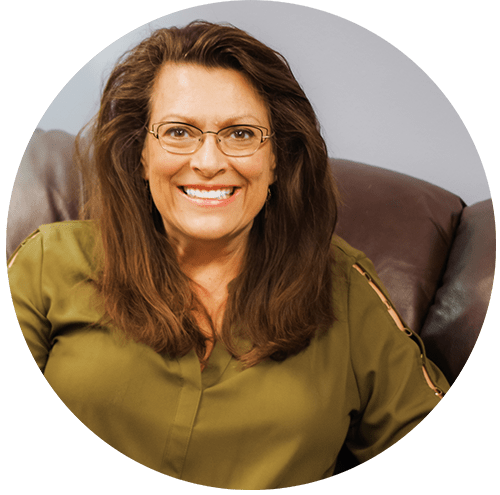
Shari Johansson,
RDH, MA, LPC, NCC, BCN, QEEG-D

Vetted. Verified. Evidence-Based
We don’t just say our approach works—it’s recognized by leading national authorities.
Our core methodology, EEG Neurofeedback, has been formally included in the California Evidence-Based Clearinghouse (CEBC), a definitive database used by child welfare agencies, clinicians, and policymakers to identify and promote the most effective interventions.
This distinction confirms that the program specifications and research evidence compiled by the Sadar team meet the highest standards for clinical validity and efficacy.
Ready to start a treatment plan rooted in science?