

 Free Course – “Neurofeedback: An Overview” – Enroll Now
Heart Rate Variability (HRV) Training: The Definitive Guide to Resilience and Recovery
Learn how to measure, interpret, and improve your body’s most powerful resilience indicator—and see the transformative power of biofeedback in action.
Heart Rate Variability isn’t just another wellness metric to track—it’s a window into your nervous system’s ability to adapt, recover, and thrive. At Sadar Psychological and Sports Center, we’ve spent decades translating the science of HRV into practical tools that clinicians, educators, parents, and individuals can use to create real, measurable change.
This guide provides the complete picture: what HRV actually measures, how to interpret your data accurately, and most importantly, how to use biofeedback training to actively improve your resilience. Whether you’re supporting clients, students, your family, or yourself, you’ll find the clarity and confidence to move from tracking numbers to training your nervous system.
Our HRV Biofeedback Experience
Between Angelika Sadar and Jenna Prada, our team draws on over 40 years of clinical experience with 20+ years specializing in HRV biofeedback combined with nearly 20 years of education experience supporting kids, families, and educators at home and in school.
Our team holds advanced certifications and has trained hundreds of people worldwide to integrate these evidence-based approaches into their work.


Get a preview of the course content.
This is the most affordable, accessible entry point into research-supported HRV biofeedback training – and you can get 4 APA CE’s when you complete it! You don’t need expensive equipment, years of experience, or complex certifications to start. This course provides everything—the science, the protocols, the troubleshooting, and the confidence—in one practical package. Watch this webinar to learn more:
Joint Accreditation Statement
This program is approved for 4 American Psychological Association (APA) and BCIA CEs. It is incumbent upon each individual practitioner to confirm if their professional organization will accept these.

Arizona Psychological Association is approved by the American Psychological Association to sponsor continuing education for psychologists. Arizona Psychological Association maintains responsibility for this program and its content.
What is HRV? Your Nervous System’s Secret Language
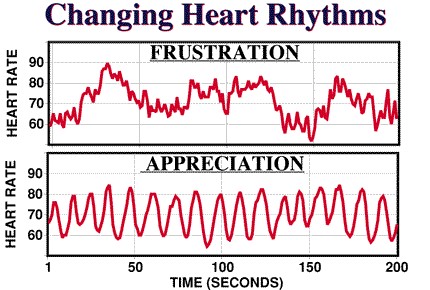
Heart Rate Variability measures something counterintuitive: the variation in time between your heartbeats. A healthy heart doesn’t beat like a metronome—it constantly adjusts its rhythm in response to your breath, emotions, and environment. This variability reflects your autonomic nervous system’s (ANS) ability to shift gears smoothly.
Think of the ANS—made up of the parasympathetic and sympathetic nervous systems—as your body’s brake and gas pedal. The parasympathetic nervous system is your brake—it helps you rest, digest, and recover. The sympathetic nervous system is your gas pedal—it mobilizes your fight-or-flight response when you need energy and action.
HRV shows how well these systems communicate and adapt. Higher variability means your nervous system can respond flexibly to whatever life demands. Lower variability often signals that you’re stuck in one gear—usually a high one—which leads to exhaustion, anxiety, and burnout over time.
Why Track HRV? Benefits for Every Audience
- For Personal Wellness: Optimize sleep quality, accelerate physical recovery from exercise or illness, and objectively measure your stress load before it becomes overwhelming.
- For Parents: Access a measurable, non-pharmaceutical tool to help your children build self-regulation skills, manage stress, improve focus, and develop emotional resilience.
- For Educators: Teach students a practical skill to manage test anxiety, improve focus and attention, and enhance academic performance through better self-regulation.
- For Clinicians/Coaches: Integrate an evidence-based metric for faster assessment and precision-guided interventions with clients experiencing anxiety, chronic pain, depression, trauma, and stress-related conditions.
The Data Decoded: How to Measure and Interpret Your HRV
Measurement Consistency: Getting Accurate Data
Accurate HRV data requires consistency: measure at the same time each day, in the same body position (usually seated or lying down), and with the same device. Small changes in your routine can create big swings in your numbers that have nothing to do with your actual physiology.
It’s also important to distinguish between consumer wearables and biofeedback training devices. While popular wearables like smartwatches can track basic HRV trends, biofeedback training requires more comprehensive data. Professional clinical systems (like BeeMediac, Thought Technology, Nexus) and clinical-grade personal systems (like emWave, Inner Balance, Wild Divine) provide the detailed real-time feedback necessary for active training. In our course, we provide a full comparison to help you choose the right tool for your specific goals.
Decoding Your Trends: What Do High and Low Scores Mean?
The most important thing to understand: your HRV is personal. Comparing your score to someone else’s is meaningless—what matters is your baseline and how it changes over time.
Different goals require attention to different patterns. For physical training decisions, day-to-day variations help you know when to push hard and when to recover. For overall health, focus, and resilience, longer-term trends reveal whether your nervous system is adapting well or getting stuck in a chronic stress response.
Learn which aspects of HRV are relevant to your goals—whether you’re supporting students, children, clients, or yourself. Acute drops (like after intense exercise or a stressful presentation) are normal and even healthy. Chronic lows that persist for weeks signal a system that needs support.
Pitfall Alert:
- Measuring after caffeine, which artificially stimulates your system.
- Using paced breathing during your baseline measurement (save that for training!)
- Measuring at inconsistent times of day.
- Panicking over a single day’s reading instead of watching trends.
In the course, we dive deep into troubleshooting both technology issues and client challenges, so you can confidently guide yourself or others through the learning process.
Wondering which HRV device is right for your needs? We cover device selection, setup, and optimization strategies in the *Heart Rate Variability Training: Foundations & Practice* course.
Mastering Your Resilience: HRV-Driven Interventions
Understanding your HRV is valuable. Training it is transformative. While tracking shows you where you are, biofeedback training teaches you how to actively shift your autonomic state—moving from passive observation to active change.
Foundational Habits for Nervous System Flexibility:
- Sleep hygiene: Consistent sleep schedules allow your parasympathetic system to fully engage in restoration and recovery.
- Consistent hydration: Dehydration increases sympathetic activation and reduces your body’s ability to regulate effectively.
- Minimizing alcohol: Alcohol disrupts autonomic balance and suppresses the restorative sleep stages that rebuild HRV.
- Natural light exposure: Morning light anchors your circadian rhythm, which directly influences autonomic patterns throughout the day.
The Power of Paced Breathing
The most direct path to improving HRV is resonant frequency breathing—finding the breathing pace that creates maximum coherence between your heart rhythm, breathing pattern, and autonomic nervous system. This isn’t generic “deep breathing.” It’s a personalized protocol that identifies your unique resonant frequency and teaches you to access a state of optimal nervous system balance on demand. Biofeedback makes this visible and trainable in real-time.
The Sadar Advantage: Training for Change
There’s a critical difference between tracking HRV and training it. Our approach gives you the scientific background needed to create buy-in—whether with yourself, your children, your students, or your clients—and then provides specific, step-by-step protocols you can implement immediately.
These methods are proven across clinical, educational, and home settings, developed through decades of practice. And because we know that real mastery requires support, our course includes office hours and assessments with timely instructor feedback, so you move forward with confidence—not confusion.
Now that you understand the foundation, you’re ready to put it into practice.
New Online Course: Heart Rate Variability for Clinicians, Educators & Parents
4-hours Recorded Online (with 4 APA CEs)
Available Nov 13th, 2025
$295 USD
